Enhancing biodiversity and ensuring healthy plant life
Enhancing biodiversity and ensuring healthy plant life
A study by Statista revealed the degree of urbanisation in the UK amounted to just under 85% in 2024, substantially reducing the number of green spaces and resultant biodiversity possibilities. Consequently, utilising sustainable practices and ensuring healthy plant life across the myriad cities across the UK shouldn’t just be a consideration but a necessity. As the UK’s premier landscape edging, AluExcel offers proven habitat creation potential while enhancing external aesthetics, writes Sol Russell, Specification Team Leader at Kinley.
Enhancing biodiversity and ensuring healthy plant life
The UK’s substantial population growth is expediting the need for increased urbanised spaces. While this is understandable, we risk eradicating so much of the green and wonderous land we have available to us and endangering some of the incredible flora and fauna the UK is known for.
For many years, concrete has been seen as the ideal material for biodiversity enhancement due to its resilient and robust properties, porous characteristics and chemical composition.
While this stability is highly effective in the construction of engineered living shorelines, the widespread use of concrete for pavements, pathways and roads covers landscapes and fertile soil, minimising space for natural habitats in more populated areas.
Additionally, concrete seepage presents a further challenge. The slow penetration of water through the concrete – primarily caused by urban infrastructure – changes natural water flow, degrades habitats and alters the water’s chemical composition.
Conversely, aluminium landscape edging offers a more sustainable and natural solution; one that’s hugely effective at enhancing biodiversity, creating habitats and ensuring more reliable soil structure.
The creation of defined habitats
The delineation of boundaries between different green spaces through the implementation of landscape edging, such as AluExcel, offers a hugely effective method of micro-ecosystem management.
Intentionally separating environments is critical in the maintenance of plant health and the encouragement of beneficial pollinators within the designated areas without the risk of invasive species taking over.
Reduced risk of chemicals in surrounding habitats
Entirely non-toxic, AluExcel aluminium landscape edging prevents the release of chemicals into surrounding water or soil. Consequently, local wildlife, soil micro-organisms and plants are all protected.
Additionally, utilising well-designed and implemented landscape edging also reduces the encroachment of grass and weeds into flower beds. This in turn minimises the need for herbicides or pesticides for weed control and creates a healthier ecosystem.
A stable ground for flora and fauna to thrive
The effective use of landscape edging in any green space can create a physical barrier that prevents soil erosion. By keeping mulch and other valuable nutrients and minerals within flower beds or designated green spaces, AluExcel aluminium landscape edging provides a stable ground for plants and wildlife to thrive.
Contributing to healthier plant growth in this way also offers the additional benefit of insect and pollinator attraction – vital for genetic diversity and plant reproduction.
Minimising the risk of urban heat islands
The increased urbanisation being seen across the UK also brings with it the risk of creating urban heat islands – the cause of rising temperatures due to concrete and other man-made surfaces absorbing and retaining heat.
By defining and containing vegetative areas and permeable surfaces, AluExcel aluminium landscape edging minimises the overall area of impervious surfaces and aids the creation of habitats and biodiverse environments.
Consequently, the additional plants and shrubs not only enable crucial evapotranspiration but also prevent temperature spikes, enhance air circulation and increase vital shading in urban areas.
Incredible recyclability
With aluminium one of the most recyclable materials, it can be recycled infinitely without losing quality. Utilising recycled aluminium for edging, such as AluExcel, therefore reduces the demand for carbon-extensive materials without compromising on aesthetic appearance or durability.
As a result of specifying aluminium over alternatives such as concrete, habitat destruction, soil erosion and water pollution at extraction sites are all significantly lessened. This thereby conserves biodiversity and natural ecosystems across the UK and the rest of the world.
Highlighting AluExcel’s biodiversity enhancement potential
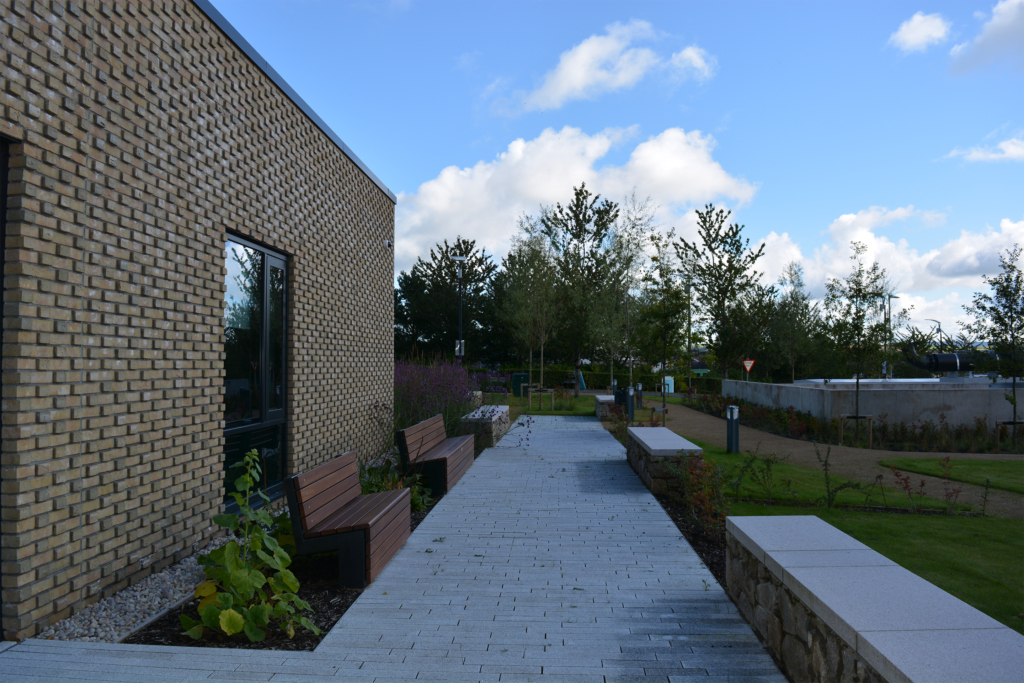
The significant biodiversity benefits offered by AluExcel were reflected nowhere better than in a landscaping project at Kidbrooke Village in London. Located to the east of Blackheath Park, the 109-hectare development saw 4,000 homes developed alongside more than 35 hectares of parkland, sports facilities and formal and informal gardens.
Described by CABE as ‘an exemplar for sustainable suburbs’, the Kidbrooke Village development utilised Kinley’s AluExcel aluminium edging to create stunning tight sweeps that matched the unique design aspirations. Simultaneously, the system also needed to enable sufficient root space for the grass to avoid die back.
As Kinley’s flagship edging, AluExcel offers an unbeatable combination of flexibility, aesthetic appeal and durability. Built to last, lightweight and resistant to corrosion, AluExcel helps landscape designers create sleek, defined looks while meeting ever-stringent sustainability requirements.
For the latest industry news visit landscapingmatters.co.uk/news
Get all of the big headlines, pictures, opinions and videos on stories that matter to you.
Follow us on Twitter and Instagram for fun, fresh and engaging content.
You can also find us on Facebook for more of your must-see news, features, videos and pictures from Landscaping Matters