Get Your Garden Ready for Organic September
Get Your Garden Ready for Organic September
Is September really nearly here already?! Where has the summer gone? After such a sizzling few months, there’s never been a better time to turn our attention to Organic September, and to think about how we can make our gardens more resilient, sustainable and self-sufficient.
Get Your Garden Ready for Organic September
Because, in these increasingly unpredictable weather times, a garden that can work hard to sustain itself…with a little helping hand from us…is surely the best garden of all!
The STIGA team loves learning from the people who really know their way around a green space, and who better to turn to than the recently Gold Medal and Best in Show-winning team at Barnsdale Gardens, nestled in beautiful Rutland?
This year is particularly special for the Barnsdale Gardens team, as they celebrate what would have been the 90th birthday of their founder, Geoff Hamilton.
Known affectionately as The People’s Gardener, Geoff was championing peat-free and organic gardening long before it became fashionable. His son, Nick Hamilton, who now owns Barnsdale Gardens, has continued that ethos for more than 40 years, and it remains firmly at the heart of the gardens today.
So, for Organic September, STIGA asked the Barnsdale Gardens team to share some of their favourite tips for getting the garden ready for autumn.
Get cutting this September with these tips from Barnsdale Gardens owner Nick Hamilton…
Sow some green manure
I like to use winter varieties of green manure on any vacant land I have. Most are nitrogen-fixing, helping to cover the ground, prevent waterlogging, suppress weeds during mild spells and add goodness to the soil.
I also enjoy seeing green rather than bare soil, which lifts my spirits on cold, wet winter days!
I broadcast-sow winter tares, grazing rye, red clover and Italian ryegrass, then lightly rake the soil over them. I also broadcast-sow field beans, simply pushing them into the soil wherever they land.
When the land is needed again, the green manure can be hoed off and dug into the soil, returning valuable nutrients and organic matter to the ground.
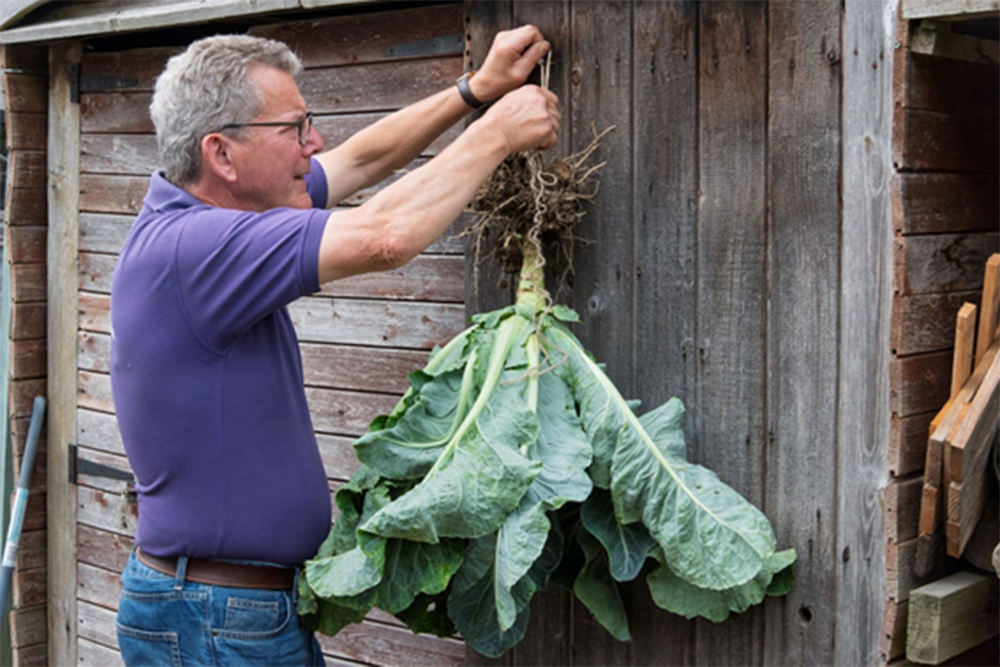
Keep on top of your caulis
As great as they are, cauliflowers do have a habit of all becoming ready at once. So, if you’re not keen on eating cauliflower cheese every day for a week, try lifting a couple of plants with a good amount of soil around their roots.
Hang them upside down from a north-facing fence or the side of a shed, and give the roots a daily spray of water.
This will slow them down and prevent them from going to seed, giving you a useful couple of extra weeks of continuity – and perhaps saving you from a serious cauliflower overload!
Look out for tomato blight
We’ve had such a great run with our tomatoes, as far back as I can remember. However, it’s now come to an earth-shattering stop – our tomatoes have got blight!
I’ve had several visitors mention over the past few weeks that they’re wondering whether their tomatoes have blight, and from their descriptions of the symptoms, it certainly sounds as though they were right.
If you spot blight, remove any infected leaves as soon as you see them, as this may help to slow its spread.
However, if, like us, the blight has spread to the stems, it’s time to strip off the fruits, place them in a tray to ripen, and dispose of the infected plant.
Collect some Eryngium seed
It’s easy to tell when Eryngium seeds are ready to collect.
First, the cone containing the seeds will turn brown. Then simply wait until the seeds begin to loosen and come away easily.
Gently press down on the cone with your thumb. If the seeds start to break away, they’re ready to collect.
Rub them off carefully and place them in an envelope, ready for sowing.
Prepare marrows and squashes for storage
Marrows and squashes will store for longer if their skins are dry and hard.
To help them ripen and dry properly, give the fruits plenty of sunlight and fresh air. Cut away some of the leaves around the fruit to allow more light to reach them, then place each fruit on a brick, upturned pot or piece of wood so that air can circulate freely around it.
This will help the skins dry and harden fully before storage…giving you a longer-lasting harvest to enjoy through the colder months.
With STIGA and Barnsdale Gardens’ tips in hand, September is the perfect time to get stuck into the garden…working with nature to create healthier soil, stronger plants and a more resilient garden for the seasons ahead.
For the latest industry news visit landscapingmatters.co.uk/news
Get all of the big headlines, pictures, opinions and videos on stories that matter to you.
Follow us on Twitter and Instagram for fun, fresh and engaging content.
You can also find us on Facebook for more of your must-see news, features, videos and pictures from Landscaping Matters