What the modern garden looks like today
What the modern garden looks like today: Spanning intimate urban gardens and ambitious public spaces, the 2026 SGLD Award winners offer a snapshot of how garden design is evolving. The award-winning projects highlight the new thinking shaping outdoor spaces today — and provide clear inspiration for homeowners looking to create gardens that are stylish, practical and ready for the challenges ahead.
1. Thermal Design: Gardens That Feels Fresh Even in Heat
Why it’s new: Designers are moving beyond bold, showy colours and using restrained greens, soft neutrals, and natural materials to make gardens feel visually and physically cooler—an aesthetic response to hotter summers and climate change. Many winning gardens played with temperature perception — cool stone, warm timber, calming green planting combinations or silvery foliage—to create spaces that feel refreshing and calm.
What the modern garden looks like today
Designer tip: Dial back strong colours and focus on foliage, texture, and pale materials. Pair light-coloured stone or paving with soft, silvery plants to make small patios and terraces feel cooler and more inviting
2. Immersive Thresholds
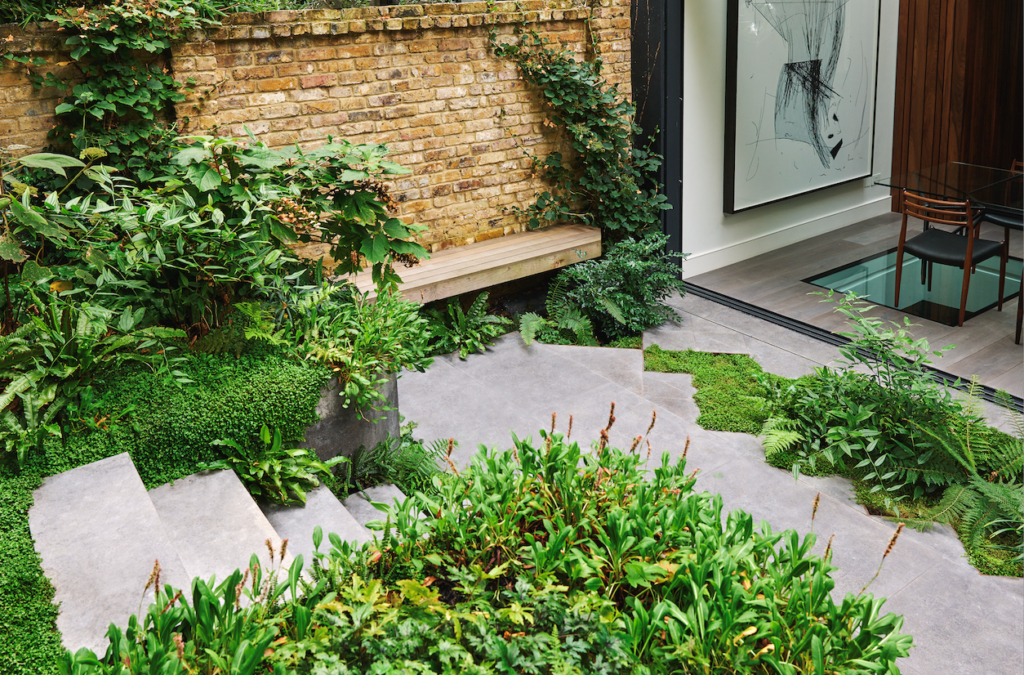
Why it’s new: The boundary between patio and garden is disappearing. Designers are letting plants spill across steps, terraces, and walls so that entering the garden feels like stepping into greenery rather than onto hard paving. Draping climbers, grasses, and shrubs over edges softens hardscape and visually enlarges the space.
Designer tip: Plant right up to paths, doors, and steps—just a narrow strip of greenery or overhanging plants can transform how your garden feels from inside the house.
3. Beyond Paving: Hardscapes that Beautify and Protect
Why it’s new: Hard landscaping is no longer just a backdrop. Designers are combining aesthetics with climate-smart functionality, using permeable paving, floating terraces, sand-swept joints, and engineered sub-bases to reduce flooding, protect roots, and enhance resilience. These gardens show that carefully detailed hardscape can blend seamlessly with planting, creating spaces that are both visually stunning and environmentally responsible.
Designer tips:
Let water drain naturally: Opt for permeable paving, gravel paths, or sand-swept joints to reduce puddles and protect plant roots.
Mix materials for impact: Combine stone, timber, or gravel with lush planting to create texture, depth, and a garden that’s visually interesting year-round.
Think long-term: Choose durable, low-maintenance materials that complement greenery while standing up to weather and wear.
4. Sustainability Without Sacrificing Style
Why it’s new: Designers are taking sustainability beyond planting choices, embracing a retain-recycle-reuse approach. Neglected structures, old pavers, and on-site stone are repurposed into features that tell a story, add character, and create visually compelling spaces. These gardens show that eco-friendly design can be both responsible and highly stylish, transforming challenging sites into layered, authentic landscapes.
Reader tips:
Repurpose materials from your own garden—old bricks, stones, or timber can become paths, terraces, or seating.
Combine reclaimed elements with new planting to add texture, history, and visual interest.
Use material variety to define different zones and create a sense of narrative in the garden.
5. Small in Scale, Rich in Detail: Where Craftsmanship Defines Luxury
Why it’s new: Luxury is no longer about large lawns or grand features. Judges consistently praised craftsmanship, material junctions and thoughtful detailing — proving refinement now matters more than scale.
Designer tip: Adopt the ‘less is more’ approach. Invest in fewer, better materials and well-finished details to elevate even the smallest garden.
6. Spacial Zoning and Layered Privacy
Why it’s new:
Designers are redefining garden division, moving away from fences and screens. Instead, they use planting density, level changes, material shifts, and subtle structures to guide movement, mask sight lines, and create layered “rooms” that unfold as you walk, without sacrificing openness or light. This approach gives each area—dining, relaxing, play, or entertaining—its own sense of purpose and privacy while keeping the space fluid and inviting, ideal for small or challenging urban sites.
Designer tips:
Use changes in paving, decking, or gravel to signal different zones.
Plant in dense groups or draping arrangements to mask sight lines and guide movement.
Introduce subtle level changes—steps, terraces, or raised beds—to create separate areas without closing the garden off.
7. Biophilic Gardens: Nature That Nurtures Wellbeing
Why it’s new: Biophilic design is moving beyond interiors into gardens, schools and corporate campuses. Designers are integrating nature-inspired patterns, biodiversity, and lush greenery near buildings to boost mental health, encourage outdoor engagement, and create restorative spaces. These award-winning gardens show that thoughtful planting can soften urban plots while fostering curiosity, wellbeing, and lasting connections with nature.
Designer tips:
Bring greenery close to buildings: Place plants near entrances, windows, or seating areas to encourage outdoor interaction.
Mix textures and layers: Combine trees, shrubs, and flowering plants to create visually rich, calming spaces.
Think beyond aesthetics: Include pollinator-friendly plants and seasonal variation to enhance biodiversity and wellbeing.
Create inviting spots: Add benches, stepping stones, or quiet nooks to encourage lingering and connection with nature
For the latest industry news visit landscapingmatters.co.uk/news
Get all of the big headlines, pictures, opinions and videos on stories that matter to you.
Follow us on Twitter and Instagram for fun, fresh and engaging content.
You can also find us on Facebook for more of your must-see news, features, videos and pictures from Landscaping Matters