Tips from designers of SGLD’S installation at RHS Chelsea
Tips from designers of SGLD’S installation at RHS Chelsea
The Society of Garden + Landscape Designers (SGLD) will present Beautiful Biodiversity at this year’s RHS Chelsea Flower Show – an installation that reflects the Society’s commitment to environmentally responsible garden design while demonstrating how wildlife-friendly gardens can also be elegant and beautifully composed.
Tips from designers of SGLD’S installation at RHS Chelsea
Designed by SGLD Members Bo Cook MSGLD and Eliza Gray MSGLD, the garden shows how carefully chosen plants, layered habitats and contemporary materials can combine to create spaces that support wildlife while remaining visually refined. A palette of pale pinks, cool blues and delicate whites sits alongside zinc planters, limestone and reclaimed timber to prove that beauty and biodiversity can work hand in hand.
But the ideas behind the garden are not just for show. The designers hope that visitors will take inspiration from the installation and apply the same principles in their own gardens – however small. Here they share their top tips for bringing biodiversity into your garden.
7 WAYS TO BRING BIODIVERSITY INTO YOUR GARDEN
The key to encouraging wildlife into your garden say Eliza and Bo is to create layers of different habitats that connect with one another. Think vertically as well as horizontally. Trees, shrubs, herbaceous plants, groundcover and bulbs all provide different shelter and food sources for wildlife helping to create a network of habitats from ground level up into the canopy. Here’s how:
ADD LEAF LITTER & LOG PILES
Small pockets of leaf litter beneath shrubs, along with half-buried logs, create valuable habitat for beetles, worms, fungi and other beneficial organisms that help build healthy soil, while compost heaps or simple, informal piles of garden waste can also provide shelter for insects, slow worms, hedgehogs and frogs.
MAKE USE OF STONE & GRAVEL
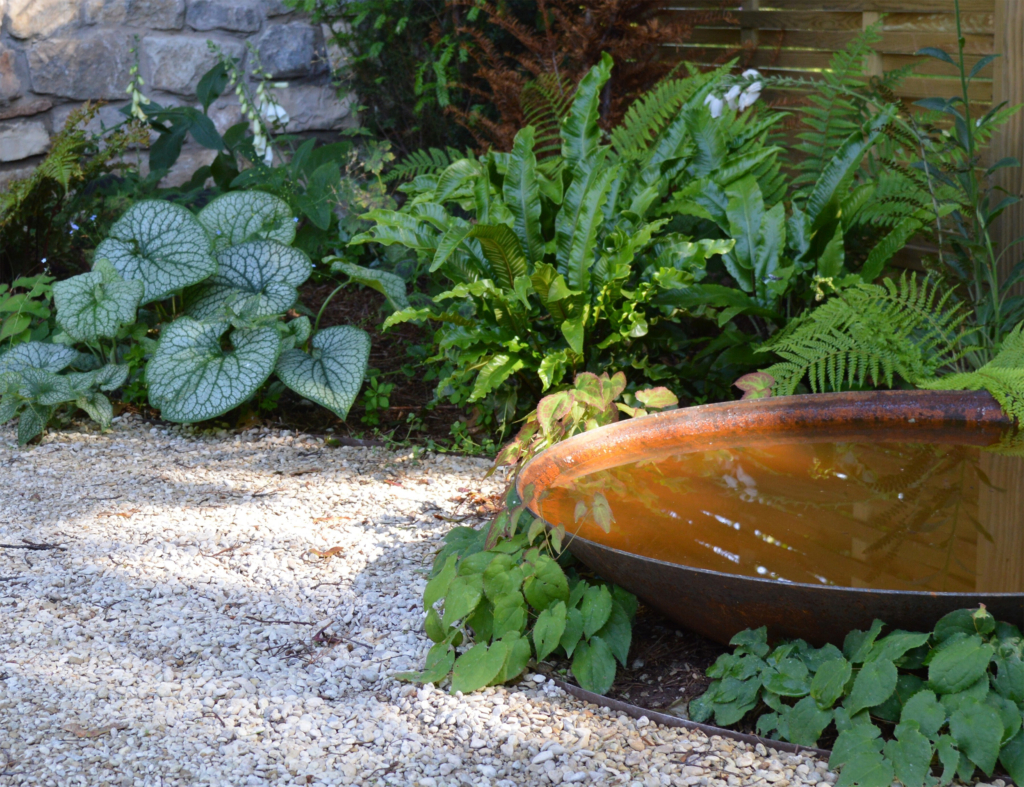
Rock piles, gravel and aggregate areas create warm, sunlit spaces that are ideal for insects such as ground-nesting bees. Small cracks and crevices in paving or walls can also become micro-habitats for mosses, ferns and self-seeding plants.
INTRODUCE WATER & DAMP HABITATS
A mini pond or even a shallow water bowl can provide essential drinking and bathing spots for birds, insects and mammals. Damp, shaded corners can also support mosses, fungi and amphibians.
PLANT WITH WILDLIFE IN MIND
Flowers with open petals will allow insects to access them more easily, and a planting palette that flowers from early spring through to late autumn will provide food throughout the seasons. Non-flowering plants such as ivy, ferns and mosses also play an important role, offering shelter and additional food sources, while allowing small patches of plants such as nettles can support butterfly species whose caterpillars depend on them. Leaving small areas of long grass or meadow also creates valuable habitats for butterflies, beetles and grasshoppers.
LEAVE SEEDHEADS & STANDING STEMS
Standing stems and seedheads provide food for birds and overwintering habitat for insects. Cutting them back in late winter rather than autumn can greatly increase biodiversity.
ADD VERTICAL PLANTING
Climbers, shrubs and green walls increase the amount of plant material within a small space while creating additional nesting and feeding opportunities for wildlife. They also help connect different layers of the garden, allowing insects and birds to move easily between ground-level planting and the canopy above.
INCORPORATE PURPOSE-BUILT HOMES
Insect hotels incorporated into walls or fences using drilled wood, hollow stems or specially designed bricks provide valuable habitat for a range of invertebrates, while bird and bat boxes positioned at the correct aspect and height can offer safe nesting and roosting opportunities.
“Dead hedges”, created from low woven prunings, also offer valuable shelter for wildlife while adding structure and texture to the garden, and features such as a gabion bench filled with building waste, terracotta pipes and paving fragments can also provide refuges for wildlife, while creating niches where mosses, ferns and self-seeding plants can establish.
For the latest industry news visit landscapingmatters.co.uk/news
Get all of the big headlines, pictures, opinions and videos on stories that matter to you.
Follow us on Twitter and Instagram for fun, fresh and engaging content.
You can also find us on Facebook for more of your must-see news, features, videos and pictures from Landscaping Matters